
Learn it
We explain the idea in plain language, usually in 10–20 minutes.
Personal finance you actually use
Learn the money stuff nobody teaches you. Then do something with it.

Our three-meeting promise
Three meetings should be enough to teach you something you can actually use.
If they aren’t, tell us. One of our presidents will sit down with you and answer your questions until they are.
The meeting model
We keep the explanation short so you have time to actually work on your money while someone is still in the room to help.
We explain the idea in plain language, usually in 10–20 minutes.
Open your laptop. Compare options, run the numbers, open the account, or take the next step in the room.
Leave knowing what you finished, what matters next, and where to pick back up.
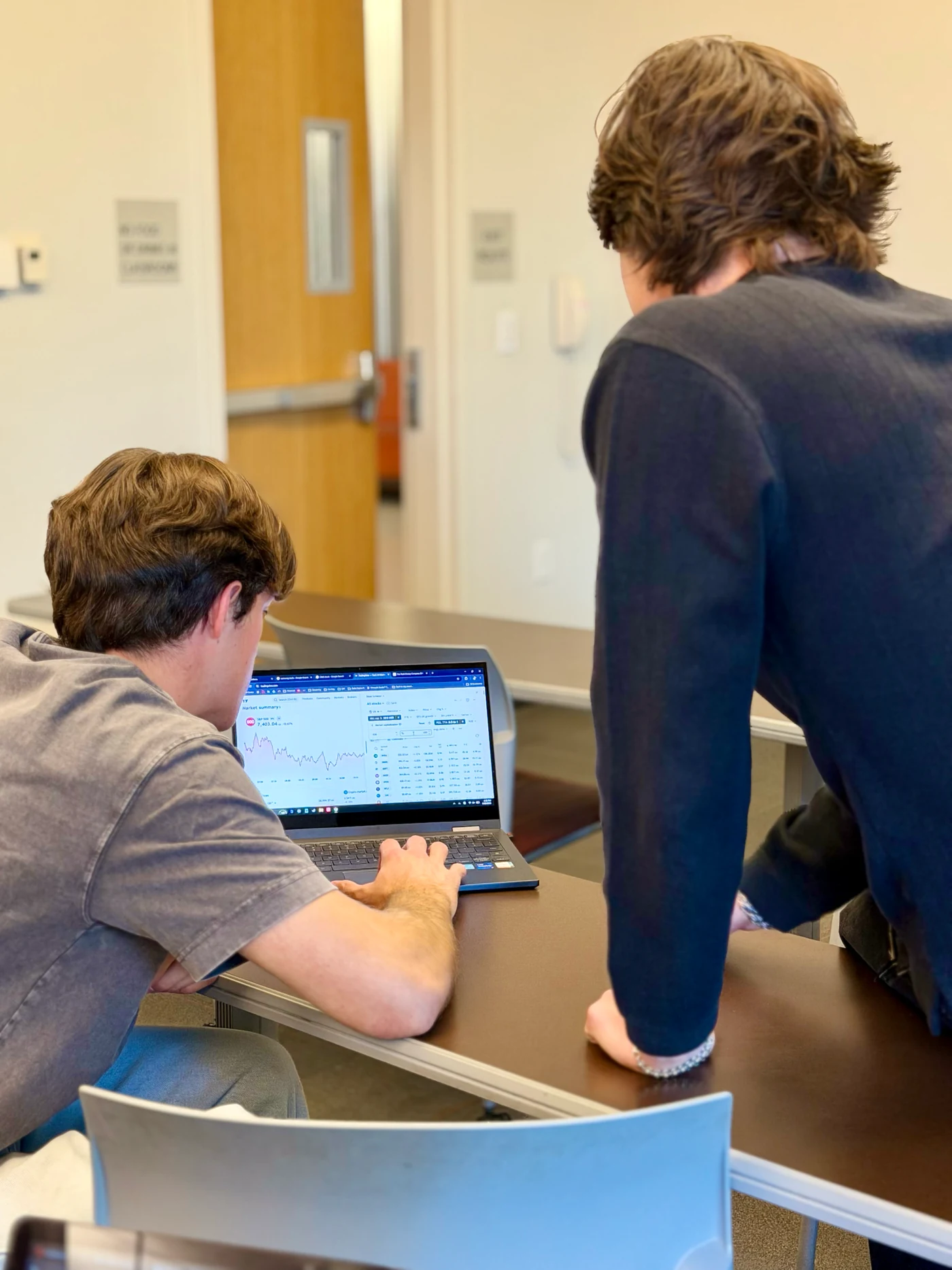
Built for real student life
We’ll make the money part simple so you can focus on living.
What students work on
You don’t need to learn everything at once. Start with the thing that matters next.
Compare yield, access, protections, fees, and requirements instead of picking whatever your bank happens to offer.
Read the HYSA guide ↗ InvestSet up the account, understand what you’re buying, move the money, and make an informed first investment when you’re ready.
Read the investing guide ↗ EvaluateCompare cards, brokerages, banks, and other products by what actually matters instead of what the ad emphasizes.
Coming soon PlanUse the Student Money Map to put spending, saving, and investing in an order that makes sense.
Open the Money Map ↗ CreditUnderstand statement balances, autopay, utilization, fees, and how to use a card without carrying bad habits with it.
Coming soon FindCheck legitimate unclaimed-property sources and learn how to avoid the scams built around them.
Coming soonWeekly workshops
No experience needed. Bring a laptop when you can; we’ll handle the explaining.
Weekly, one-hour workshops. Semester day, time, and room will be announced before launch.
Student feedback
Keep learning between meetings
Short notes, useful links, and practical reminders you can come back to when you need them.
Common questions
No. Concepts are explained as simply as possible, and meetings are designed so a beginner can participate without pretending to know the jargon.
No. The focus is personal finance: the money decisions students make in their own lives. Investing is one topic, but the club also covers saving, credit, product research, and financial decision-making.
No. Many useful steps—learning, comparing products, checking terms, setting goals, and preparing an account—cost nothing. When investing is discussed, the emphasis is readiness and long-term thinking rather than trading.
Regular meetings are open, and there is no expectation that students attend every session. Joining the interest list helps the club share schedule changes and topic updates.
No. Club content is general education, not individualized financial, legal, or tax advice. Specific products may be used as examples, but not as personal recommendations.
Attendance data helps the team understand which topics students need, measure whether workshops produce real action, and communicate future meetings. The club does not sell or rent student contact information.